




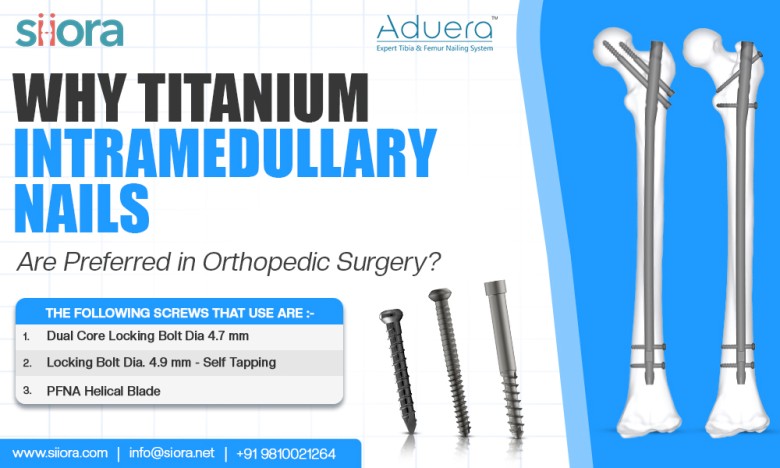
Intramedullary nails are widely used in orthopedic surgery to treat fractures of long bones such as the femur, tibia, and humerus. Over the years, implant design and materials have improved significantly. Among the available materials, titanium has become a popular choice for many surgeons. While stainless steel implants are still used in some cases, titanium intramedullary nails are often preferred because of their compatibility with the human body and their ability to support natural bone healing.
What Are Titanium Intramedullary Nails?
Intramedullary expert nails are metal rods inserted into the central canal of a bone to stabilize fractures. They hold the bone fragments in proper alignment while the fracture heals. Titanium nails are made from specialized medical-grade titanium alloys that provide strength while remaining relatively lightweight. These implants are designed to remain stable under load while also allowing the bone to recover gradually during the healing process.
Better Compatibility with the Human Body
One of the main reasons surgeons prefer titanium implants is their excellent biocompatibility. Titanium forms a protective oxide layer when exposed to air and body fluids. This layer helps prevent corrosion and reduces the risk of reactions in surrounding tissues. Because of this property, titanium implants are generally well tolerated by the body.
Patients with titanium implants rarely experience allergic reactions or irritation caused by the material itself. This makes titanium particularly suitable for long-term implantation.
Flexibility That Supports Bone Healing
Another important advantage of titanium is its elasticity. Compared with stainless steel, titanium is slightly more flexible and behaves more like natural bone. This allows the implant and the bone to share the load during daily activities.
When small, controlled forces pass through the fracture site, they can encourage the body to form new bone. This process helps create a stronger healing response. In contrast, extremely rigid implants may carry most of the load themselves, which can sometimes slow the healing process.
Reduced Stress on the Bone
Because titanium nails distribute mechanical forces more evenly, they reduce the risk of stress shielding. Stress shielding occurs when the implant takes too much of the load, leaving the bone with less mechanical stimulation. Over time, this can weaken the surrounding bone.
Titanium’s mechanical properties help maintain a more natural load pattern, which can support better bone health during recovery.
Advantages in Medical Imaging
Titanium implants also make postoperative imaging easier. They produce fewer artifacts on diagnostic scans such as X-rays, CT scans, and MRI scans. Clear imaging helps surgeons monitor fracture healing more accurately and detect any complications early.
This benefit is particularly helpful when managing complex fractures or evaluating delayed healing.
Lightweight and Comfortable for Patients
Titanium is lighter than stainless steel, which means implants made from it place slightly less stress on surrounding tissues. While patients may not directly notice the difference in weight, a lighter implant can contribute to improved comfort and mobility during recovery.
The Last Say
Titanium intramedullary nails have become a preferred option in modern orthopedic surgery for several reasons. Their biocompatibility, flexibility, and ability to support natural bone healing make them well-suited for fracture fixation. In addition, their compatibility with medical imaging and their lightweight nature provide practical advantages for both surgeons and patients. As orthopedic technology continues to evolve, titanium orthopaedic implants are likely to remain an important part of effective fracture treatment.













Facebook Conversations
Disqus Conversations