




Precision in Dermatological Procedures: The Role of the Goulian Knife
The field of plastic and reconstructive surgery relies heavily on the marriage between surgeon skill and instrument precision. When it comes to skin grafting, the margin for error is incredibly slim. A graft that is too thick may fail to revascularize, while one that is too thin may contract excessively or fail to provide adequate coverage. In this delicate balance, the instruments chosen by the medical professional are not just tools, but extensions of their hands. Among the various dermatomes available in modern medicine, one instrument stands out for its specific utility and historical reliability in harvesting skin grafts.
The goulian knife has established itself as a staple in operating rooms, particularly where versatility and tactile control are paramount. Unlike heavy, powered dermatomes that are often used for harvesting large surface areas on the thigh or back, manual instruments allow for a different level of finesse. This blog explores why this specific tool remains relevant in an era of high-tech medical solutions and how companies are continuing to refine its design for better patient outcomes.
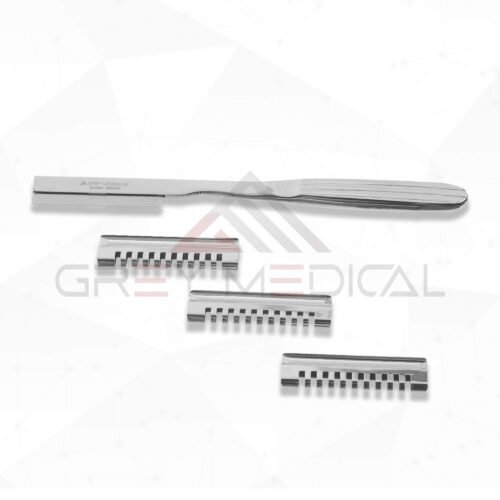
Understanding the Tool as a Vital Surgical Instrument
At its core, this instrument is a manual dermatome designed for taking split-thickness skin grafts. It is often utilized in conjunction with different guard plates, which allow the surgeon to determine the exact thickness of the skin being harvested. This adjustability is critical because different wounds require different graft thicknesses for optimal healing. For instance, a facial defect might require a thicker graft for better cosmetic matching, whereas a burn on a less visible area might be treated with a thinner graft to ensure rapid donor site healing.
The design of the goulian knife allows surgeons to maintain a high degree of control over the width and uniform thickness of the graft. While electric or air-powered dermatomes provide speed, they can sometimes lack the precise feedback that a manual blade offers. When a surgeon uses a manual blade, they can feel the resistance of the tissue, allowing them to adjust their angle and pressure instinctively. This tactile feedback loop is essential when working on difficult contours of the body where a large, powered machine would be cumbersome or risky to use.
Technical Excellence and Innovation by GreyMedical®
The efficacy of any surgical instrument depends entirely on the quality of its manufacturing. This is where industry leaders play a pivotal role in patient care. GreyMedical® is a prime example of a privately owned medical technology company that has dedicated itself to innovation and excellence in the craft of surgical instruments. Their approach to manufacturing goes beyond mass production; it focuses on the distinct needs of the surgical community.
For instruments like the goulian knife, the sharpness and durability of the blade are non-negotiable. GreyMedical® understands that a dull or poorly crafted blade can lead to jagged graft edges, increased trauma to the donor site, and ultimately, poor surgical outcomes. By utilizing high-grade stainless steel and employing rigorous quality control measures, GreyMedical® ensures that surgeons are equipped with tools that perform consistently. Their commitment to innovation means they are constantly looking for ways to improve the ergonomics and functionality of traditional tools, ensuring that established medical technologies evolve alongside modern surgical techniques.
Clinical Applications and Benefits
The versatility of this instrument extends across various clinical scenarios. It is frequently employed in burn units for debridement—the removal of dead, damaged, or infected tissue—to improve the healing potential of the remaining healthy tissue. By allowing for precise excision of necrotic layers without damaging the viable tissue underneath, the goulian knife helps prepare the wound bed for successful grafting.
In reconstructive surgery, particularly following oncological resections like the removal of skin cancers, the ability to harvest small, custom-sized grafts is invaluable. A surgeon can harvest a graft that perfectly matches the defect size, reducing waste and minimizing the size of the donor site wound. Furthermore, because the instrument is manual and compact, it is easily portable and quick to set up, making it an excellent choice for smaller procedures or settings where setting up complex power equipment is impractical. The benefit to the patient is clear: less trauma to the skin, faster procedure times for smaller grafts, and potentially better cosmetic results due to the precision of the harvest.
Elevating Surgical Standards
As medical technology advances, there is often a rush to replace mechanical tools with digital or automated alternatives. However, the enduring presence of manual dermatomes proves that some designs are timeless. The goulian knife represents a perfect blend of simplicity and efficacy, providing surgeons with the control they need to perform delicate procedures with confidence.
With companies like GreyMedical® continuing to uphold high standards in manufacturing and innovation, the medical community can rest assured that these vital tools will remain reliable. Whether it is used for a complex burn reconstruction or a small cosmetic repair, the reliability of the instrument directly influences the quality of the result. As we look to the future of surgery, it is clear that while technology will change, the need for precision, quality, and tactile control will never diminish.













Facebook Conversations
Disqus Conversations