




A Guide to Hemostat Surgical Instrument Types
In the precise world of surgery, controlling bleeding is fundamental to a successful outcome. Surgeons rely on a variety of specialized tools to achieve hemostasis, the process of stopping blood flow. Among the most critical of these is the hemostat surgical instrument, a clamp-like device designed to grasp and secure blood vessels. Understanding the different types available is essential for any medical professional, as each is crafted for a specific purpose, vessel size, and surgical site.
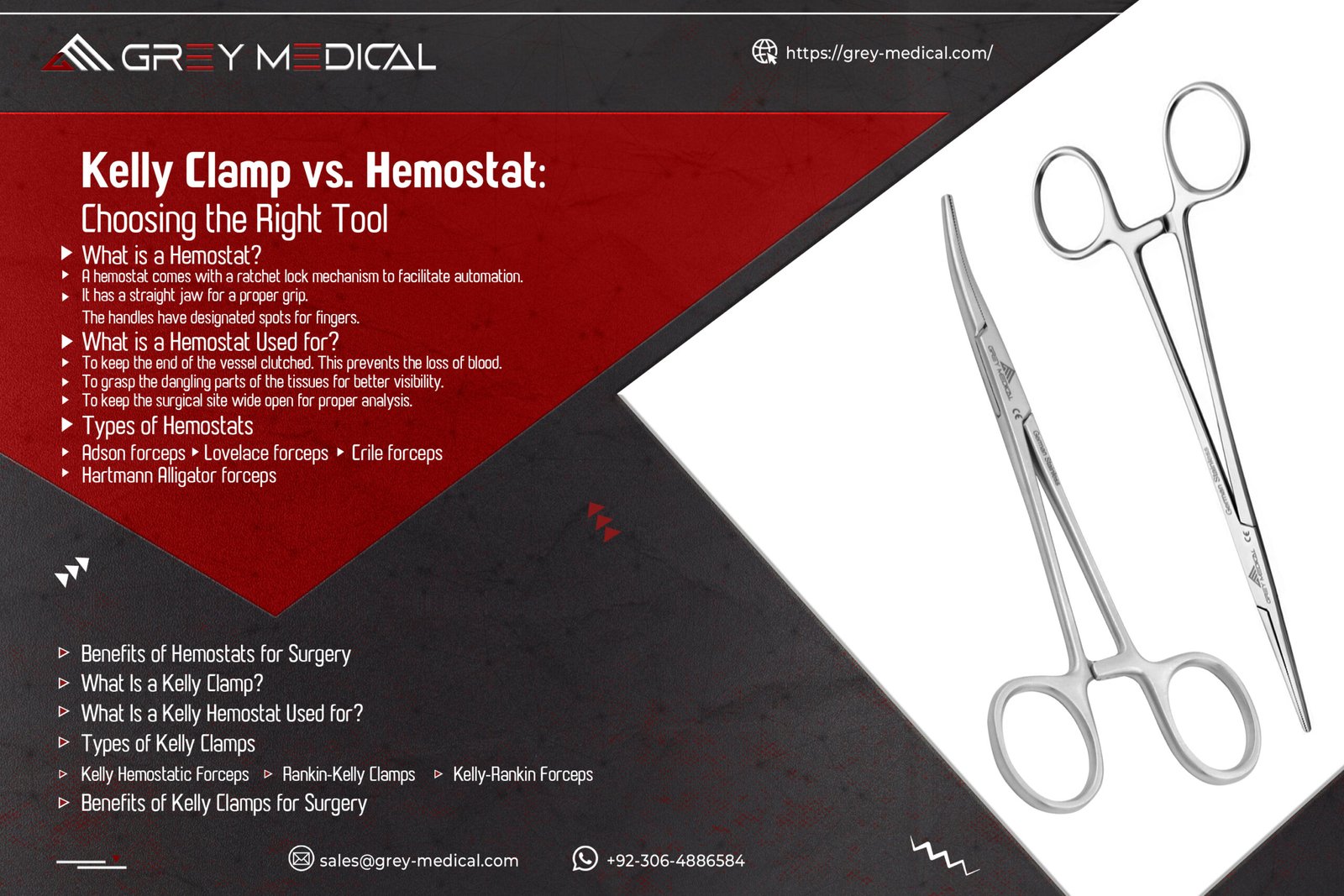
What is a Hemostat?
A hemostat, also known as a hemostatic clamp or arterial forceps, is a surgical tool used to control bleeding by clamping and holding blood vessels. Its design typically includes ring handles, a ratchet locking mechanism to hold it in place, and a set of jaws at the tip. This locking feature allows a surgeon to apply pressure to a vessel and then release their grip, freeing their hands for other tasks while the clamp maintains hemostasis.
The jaws of a hemostat surgical instrument are often serrated to ensure a firm grip on tissue without causing unnecessary trauma. The length, shape, and jaw design vary significantly between types, allowing for use in a wide range of surgical scenarios. Selecting the appropriate one is a key decision that can impact the efficiency and safety of a procedure.
Major Types of Hemostats and Their Uses
Hemostats are generally categorized based on their size, the shape of their jaws, and the pattern of their serrations. These variations make them suitable for different types of tissue and blood vessels.
Kelly and Crile Hemostats
Kelly and Crile hemostats are two of the most common and versatile types found in a surgical tray. They look very similar at first glance but have a key difference in their jaw serrations. Crile hemostats feature serrations that run the full length of the jaw, providing a secure grip for clamping larger vessels. This makes them ideal for general surgery where robust clamping is needed.
In contrast, Kelly hemostats have serrations that only cover the distal half of the jaws. This design allows them to be used for clamping larger vessels while also being suitable for more delicate tissue dissection near the tips. Both Kelly and Crile hemostats are available in straight and curved jaw variations to accommodate different angles of approach during surgery.
Halsted-Mosquito Hemostats
For procedures requiring extreme precision, such as plastic, pediatric, or vascular surgery, the Halsted-Mosquito hemostat is the instrument of choice. These are significantly smaller and more delicate than their Kelly or Crile counterparts. Their fine, short jaws are designed to clamp small blood vessels and capillaries with minimal tissue damage.
The "Mosquito" hemostat provides surgeons with the control needed to work in confined spaces or on fragile structures. Like other types, they come in both straight and curved forms. The delicate nature of this hemostat surgical instrument makes it indispensable for achieving hemostasis in highly sensitive surgical fields.
Rochester-Pean and Rochester-Carmalt Hemostats
When dealing with larger, tougher tissue bundles or major blood vessels, surgeons turn to heavier clamps like the Rochester-Pean and Rochester-Carmalt hemostats. These instruments are longer and more robust than Kelly or Crile forceps. Rochester-Pean hemostats have fully serrated jaws, similar to a Crile, but are much larger and stronger, making them suitable for occluding major arteries or securing thick tissue.
The Rochester-Carmalt hemostat is unique due to its jaw pattern. It features longitudinal serrations running down the length of the jaws, with additional cross-serrations at the tip. This combination provides an exceptional grip on large tissue masses or vessels, preventing slippage. They are frequently used in general, thoracic, and orthopedic surgery to manage substantial bleeding.
The Importance of Quality and Innovation
The effectiveness of any surgical procedure depends heavily on the quality of the instruments used. A well-crafted hemostat surgical instrument ensures a reliable grip, a smooth locking mechanism, and durability to withstand repeated sterilization. Companies like GreyMedical® are at the forefront of this field, dedicating their expertise to innovation and excellence in surgical instrument design. By focusing on superior materials and ergonomic construction, they provide surgeons with tools they can trust in critical moments.
The evolution of the hemostat surgical instrument reflects the ongoing advancements in medicine. From the general-purpose Crile to the delicate Mosquito, each design has been perfected to meet a specific surgical need. As procedures become less invasive and more complex, the demand for high-quality, specialized instruments will only continue to grow.
Conclusion
Hemostats are fundamental to modern surgery, providing the control necessary to perform complex procedures safely. From the versatile Kelly and Crile clamps to the delicate Mosquito and robust Rochester-Carmalt forceps, each type serves a distinct purpose. The ability to select the right instrument for clamping vessels of different sizes and in various locations is a critical skill for surgical teams. By understanding these differences and relying on high-quality instruments from innovators like GreyMedical®, surgeons can achieve effective hemostasis, minimize tissue trauma, and ensure the best possible outcomes for their patients.













Facebook Conversations
Disqus Conversations