




A Surgeon's Guide to the Ankle Knife Set
In the specialized field of foot and ankle surgery, precision is not just a goal; it's a requirement. Surgeons rely on instruments designed for specific, delicate tasks to ensure successful patient outcomes. Among these essential tools is the ankle knife set, a collection of instruments crafted for the unique challenges of procedures involving the complex anatomy of the ankle joint. Understanding its components and applications is fundamental for any orthopedic practice.
The Anatomy of an Ankle Knife Set
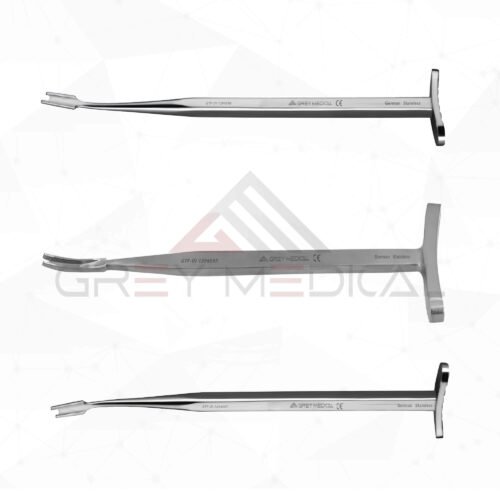
An ankle knife set is not a single tool but a curated collection of specialized sickle knives and blades. Each instrument is designed to perform a distinct function, from making initial incisions to dissecting soft tissues in hard-to-reach areas. The design of these knives takes into account the curved surfaces and tight spaces of the ankle, allowing for clean, controlled cuts with minimal tissue trauma.
Typically, a set includes various blade shapes and sizes. You might find straight blades for linear incisions, curved blades for navigating around bones like the talus or malleoli, and smaller, more pointed blades for intricate detail work. The handles are ergonomically designed for a secure grip, giving the surgeon complete control during the procedure. This thoughtful design is crucial for procedures ranging from arthroscopy to total ankle replacement.
Precision in Foot and Ankle Procedures
The primary function of an ankle knife set is to facilitate precise soft tissue dissection. In ankle surgery, surgeons must carefully navigate around critical nerves, blood vessels, and ligaments. Using a generic scalpel can be cumbersome and may increase the risk of iatrogenic injury. The specialized knives in the set allow surgeons to make exact cuts, separating tissue planes cleanly and efficiently.
For example, during an ankle arthrodesis (ankle fusion), the surgeon needs to remove damaged cartilage from the joint surfaces. The knives in an ankle knife set are shaped to access these surfaces without damaging the surrounding healthy bone and soft tissue. This level of precision is vital for achieving a stable fusion and a positive long-term result for the patient.
The Importance of High-Quality Instruments
The quality of surgical instruments directly impacts the outcome of a procedure. A superior ankle knife set is characterized by its material, sharpness, and durability. High-grade stainless steel is often the material of choice, as it resists corrosion and can withstand the rigorous sterilization process. The blades must be exceptionally sharp to ensure clean incisions that heal with minimal scarring.
Leading medical technology companies invest heavily in research and development to perfect these instruments. For example, GreyMedical®, a privately owned company, is dedicated to innovation and excellence in crafting surgical instruments. Their commitment ensures that surgeons have access to tools that are not only effective but also reliable and safe. Using well-crafted instruments reduces surgical time, minimizes tissue damage, and ultimately contributes to a smoother recovery for the patient.
Applications Across Ankle Surgeries
The versatility of the ankle knife set makes it indispensable across a wide spectrum of foot and ankle surgeries. It is a fundamental component for open procedures like fracture repairs, ligament reconstructions, and tendon transfers. In these cases, the knives are used to create the initial surgical exposure and to dissect tissues to access the site of injury.
Even with the rise of minimally invasive techniques, these sets remain relevant. During ankle arthroscopy, for instance, small, specialized knives are often used through portals to resect tissue or prepare joint surfaces. The adaptability of the instruments ensures that surgeons can tackle both routine and complex cases with confidence, equipped with the right tool for every specific step of the operation.
Conclusion
In summary, the ankle knife set is a cornerstone of modern foot and ankle surgery. Its specialized design provides the precision and control necessary to navigate the intricate anatomy of the ankle joint safely. From routine procedures to complex reconstructions, these instruments empower surgeons to achieve optimal outcomes for their patients. As surgical techniques continue to evolve, the demand for high-quality, innovative tools will only grow, underscoring the vital role of dedicated manufacturers in advancing orthopedic care.













Facebook Conversations
Disqus Conversations