




Precision in the operating room is not just a goal; it's a necessity. Every maneuver, every grip, and every manipulation of tissue relies on the surgeon's skill and the quality of their instruments. Among the most fundamental tools in any surgical kit are forceps. At Azeemed Instruments®, we understand that a deep knowledge of the different surgical forceps types is crucial for medical professionals. This guide explores the various categories of forceps, highlighting their specific functions and why choosing high-quality instruments is essential for successful patient outcomes. Our dedication to excellence ensures that every tool we provide meets the rigorous demands of modern surgery.
The Core Function of Surgical Forceps
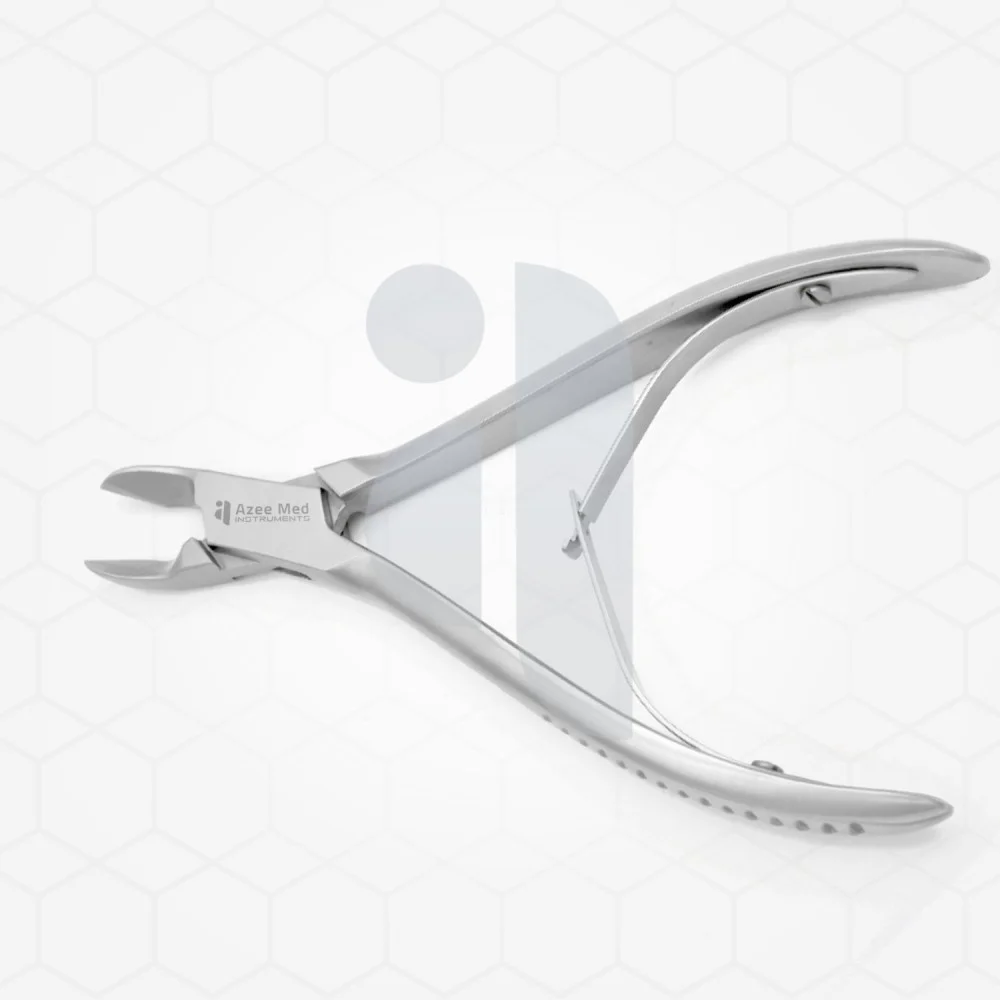
Surgical forceps are indispensable tools designed for grasping, holding, and manipulating tissues, organs, and other materials during a procedure. Their forceps ferris smith design, often resembling a pair of tongs, allows for an extension of the surgeon's hands, enabling delicate and firm handling that would otherwise be impossible. The effectiveness of a procedure can often depend on using the correct type of forceps for the task at hand. From holding a fine suture needle to clamping a major artery, the right instrument ensures control and minimizes tissue trauma.
Non-locking vs. Locking Forceps: A Key Distinction
One of the primary ways to categorize forceps is by their locking mechanism. Non-locking forceps, often called "thumb forceps" or "pick-ups," function like tweezers. They are held between the thumb and forefinger and are used for grasping and holding tissue during suturing or dissection. The pressure applied by the surgeon directly controls the grip, making them ideal for delicate, moment-to-moment adjustments.
In contrast, locking forceps feature a ratchet mechanism called a hemostat that allows them to be clamped in place. This feature is invaluable when a surgeon needs to maintain a constant, firm grip on tissue or a vessel without continuous manual pressure. This frees the surgeon's hands for other tasks. These are commonly used for clamping blood vessels to control bleeding, earning them the nickname "hemostats." Understanding the different surgical forceps types is foundational for any medical professional.
Exploring Different Categories of Surgical Forceps
The world of surgical instruments is vast, with forceps designed for nearly every imaginable scenario. They can be broadly classified based on their function, such as tissue-holding, dressing, or hemostatic forceps. The design of the tips—whether they are toothed or smooth, straight or curved—further defines their specific application and impact on tissue.
Tissue Forceps: Precision in Handling
Tissue forceps are designed to handle delicate tissues with minimal damage. For example, Adson forceps are a popular choice, available with or without teeth. The toothed version provides a secure grip on dense tissue like skin, while the smooth (or plain) version is better suited for handling delicate structures like blood vessels or nerves. Similarly, DeBakey forceps feature a unique series of fine, parallel serrations that provide a gentle yet secure grip, making them a staple in cardiovascular surgery. Azeemed Instruments® provides a comprehensive range of these tools, ensuring professionals have the right instrument for every delicate task.
Hemostatic Forceps: Controlling Bleeding
Hemostats, or hemostatic forceps, are a critical subset used to clamp blood vessels and control bleeding (hemostasis). Kelly and Crile forceps are classic examples, characterized by their locking handles and serrated jaws. While similar, they have key differences; Kelly forceps have serrations only on the distal half of the jaws, whereas Crile forceps have serrations along the entire length, providing a more robust grip. The choice between them depends on the size of the vessel and the amount of pressure needed. Knowing these distinct surgical forceps types helps ensure procedural efficiency.
Dressing Forceps: For General Use
Dressing forceps are versatile, general-purpose instruments used for handling surgical dressings, sponges, and other materials. They typically have serrated tips to provide a good grip on gauze and other supplies. Their robust construction allows them to be used for a variety of tasks in and out of the sterile field, from packing a wound to removing items from a sterilized container. Their simplicity and utility make them a fundamental component of any surgical tray.
Why High-Quality Instruments Matter
Choosing the right tool is only half the battle; the quality of that tool is equally important. Inferior instruments can lead to slippage, inadequate grip, and unintended tissue damage, compromising the safety and success of a surgery. Azeemed Instruments® is committed to providing surgeons with instruments crafted from high-grade stainless steel, ensuring durability, corrosion resistance, and reliable performance. Our focus on quality reflects our understanding that the best medical professionals deserve the best tools. From the most basic dressing forceps to the most specialized surgical forceps types, our products are designed for precision and reliability. The extensive catalog of surgical forceps types offered by our company demonstrates this commitment.














Facebook Conversations
Disqus Conversations